TL;DR:
- Effective enterprise AI governance is crucial due to tightening regulations, increasing deployments, and associated legal risks. Establishing clear accountability, adopting recognized frameworks like NIST AI RMF, and integrating governance with identity management are essential for operational success. Tailoring governance to organizational maturity and risks ensures ongoing compliance and minimizes exposure.
Enterprise AI governance best practices have never mattered more. Regulatory deadlines are closing in, AI deployments are multiplying across functions, and the gap between adopting AI and governing it responsibly is where reputational and legal exposure lives. Executives and compliance officers who treat governance as an afterthought are discovering that data integrity failures, unexplainable decisions, and audit gaps carry serious consequences. This article gives you a structured, experience-informed approach to building governance that actually works.
| Point | Details |
|---|---|
| Establish accountability first | Appoint AI risk owners and define policies before deploying or expanding any AI system. |
| Adopt a recognized framework | NIST AI RMF and ISO 42001 provide structured, scalable paths to defensible AI governance. |
| Governance is lifecycle-long | Continuous monitoring, drift detection, and incident response are non-negotiable after deployment. |
| Match governance to risk tier | Focus your highest controls on the AI systems carrying the most organizational and regulatory exposure. |
| Technical enforcement matters | Integrating governance with identity and access management turns policy into real-time control. |
Most governance programs fail not from a lack of documentation but from a lack of ownership. Before you write a single policy, you need a named person or body that has the organizational authority to enforce AI risk decisions. This means a Chief AI Officer, an AI Risk Committee, or a designated accountability structure with visible executive backing.
This role is responsible for defining acceptable use boundaries, setting risk tolerance thresholds, and making the call when a borderline AI deployment needs to be paused or retired. Without this authority anchored at the top, every governance initiative becomes advisory at best.
Pro Tip: Tie AI governance accountability to your existing enterprise risk framework rather than creating a parallel structure. This keeps incentives aligned and avoids governance becoming an isolated compliance function.
You cannot govern what you cannot see. The foundational step in any credible enterprise AI management program is cataloging every AI system in use, including shadow deployments in individual business units. Each entry should include the system’s purpose, data inputs, decision outputs, risk classification, and the team responsible for it.

Once your inventory exists, classify each system by risk tier. A recommendation engine for marketing email timing carries different exposure than an automated credit scoring model or an AI tool influencing HR decisions. Risk classification determines which governance controls apply, which systems require human review before acting, and where your audit resources should concentrate.
The NIST AI RMF, published in January 2023, organizes AI risk management into four interactive functions: GOVERN, MAP, MEASURE, and MANAGE. Most organizations make the mistake of jumping to MAP or MEASURE before establishing GOVERN. That ordering error is costly.
GOVERN is the function that creates organizational authority, accountability structures, policies, and culture. Without it, your risk mapping and measurement activities have no enforcement mechanism and no clear owner to act on findings. The sequence matters.
NIST AI RMF operationalizes trustworthiness across the full AI lifecycle rather than treating governance as a one-time documentation exercise. That distinction separates organizations with genuine governance programs from those with binders on a shelf.
Where NIST AI RMF offers voluntary guidance, ISO 42001 gives you a certifiable AI Management System with external verification. Certification involves a two-stage audit: Stage 1 reviews documentation, Stage 2 evaluates implementation. The cycle runs three years with annual surveillance audits to maintain standing.
What makes ISO 42001 particularly valuable is what it covers that ISO 27001 does not. ISO 42001 includes AI-specific governance controls such as bias testing, transparency requirements, human oversight mechanisms, and lifecycle governance across your entire AI portfolio. If your organization already holds ISO 27001 certification, you can typically achieve ISO 42001 within three to six months by building on that existing management system infrastructure.
“Certification is not just a credential. It signals to regulators, customers, and partners that your AI governance program meets an independently verified standard. In high-stakes sectors like finance, healthcare, and critical infrastructure, that signal is worth more than any internal policy document.”
The EU AI Act’s general application date is August 2, 2026, with high-risk obligations under Annex III proposed for delay to December 2027 and Annex I obligations to August 2028. If you operate in or sell into EU markets, your compliance posture needs to be active now, not after the first enforcement action.
High-risk AI systems face the most demanding requirements, including data governance obligations that most organizations underestimate. Automated data lineage tracking is critical to provide auditable evidence of data origin, transformations, and versioning. Manual documentation cannot satisfy this at enterprise scale. You need tooling.
Policy documents are necessary. They are not sufficient. AI governance must evolve from policy-based oversight to technical enforcement integrated with identity and access management for real-time control. This means your IAM system knows which AI agents can access which data, under what conditions, and with what logging requirements attached.
Federated governance architectures allow you to enforce AI risk controls at the point of action rather than relying on after-the-fact audit trails. When an AI agent attempts to retrieve sensitive customer data or execute a workflow outside its authorized scope, the IAM layer blocks or escalates it. This moves governance from reactive to preventive. For enterprises managing dozens of AI deployments across functions, this enforcement model is the only one that scales.
Pro Tip: Review your data encryption practices for AI platforms alongside IAM integration. Role-based access controls mean little if data at rest or in transit is inadequately protected. For a detailed look at this, the Hymalaia guide on AI platform encryption is worth your time.
This is the practice most executives overlook. UX design is a crucial enabler of AI governance, providing transparency, human-in-the-loop controls, and explainable interfaces that make audit and accountability possible in daily workflows. Governance controls that users cannot see or interact with will be circumvented or ignored.
When an employee interacts with an AI recommendation, the interface should surface why that recommendation was made, what data it used, and how to flag or override it. This is not just good design. It is the operational layer that makes your transparency commitments real. Organizations investing in AI business process optimization consistently find that governance friction drops when the tools themselves make responsible use the path of least resistance.
Post-deployment monitoring is where most governance programs have their largest gaps. AI models drift. Data distributions shift. A model that performed well at deployment may produce biased or inaccurate outputs six months later if conditions change. Continuous monitoring and reassessment, including drift detection and performance benchmarking against defined thresholds, must be built into your operating rhythm.
Pair monitoring with a defined incident response protocol. When a governance issue is detected, who is notified? What is the escalation path? Who has authority to suspend a system pending investigation? These answers need to exist before an incident occurs, not during one.
The table below offers a practical comparison of the leading governance frameworks and tool categories available to enterprise teams in 2026. Use it as a starting point for your enterprise AI governance tools comparison.
| Framework / Tool Type | Certification | Scope | Best Fit |
|---|---|---|---|
| NIST AI RMF | Voluntary guidance | Full AI lifecycle, risk functions | Organizations building governance from scratch |
| ISO/IEC 42001 | Certifiable (3-year cycle) | AI Management System, ethics, oversight | Regulated industries needing external validation |
| EU AI Act compliance tools | Regulatory requirement | High-risk AI, data lineage, audit trails | EU-market organizations with high-risk AI deployments |
| IAM-integrated governance platforms | Varies | Real-time enforcement, access control | Enterprises with distributed AI agent deployments |
| AI monitoring and drift detection tools | N/A | Post-deployment performance, bias tracking | Any organization with production AI systems |
When evaluating enterprise AI tools scalability comparison, ask whether the tool supports cross-functional governance teams, integrates with existing risk management systems, and can ingest your AI system inventory at scale. Point solutions that require manual data entry will not survive contact with a large enterprise portfolio.
Pro Tip: Organizations with ISO 27001 already in place can achieve ISO 42001 faster by mapping existing controls to AI-specific requirements. This reduces both timeline and cost significantly compared to starting from zero.
Governance programs that try to achieve everything at once typically achieve nothing well. If your organization is in the early stages of AI deployment, start with your highest-risk systems and build your inventory, policies, and monitoring capabilities around those first. Expand incrementally as your governance team builds competency and your tooling matures.
For organizations in heavily regulated industries such as financial services, healthcare, or critical infrastructure, the risk tolerance bar is lower and the documentation requirements are higher. Your governance scope should reflect that reality from the start. For teams in earlier-stage AI adoption, the responsible enterprise AI practices framework gives you a structured path from foundational to advanced governance without overbuilding before you are ready.
Avoid common pitfalls: do not treat governance as a one-time project, do not assign it entirely to the legal or IT function without business involvement, and do not mistake documented policies for operational governance. The goal is a living program that adapts as your AI portfolio and the regulatory environment evolve.
I have watched a lot of organizations invest heavily in governance frameworks and still end up exposed when an incident actually hits. The pattern is almost always the same. Leadership approved a framework. Someone wrote the policies. The documentation passed an internal audit. And then, when a real decision needed to be made quickly, no one had clear authority to act and the cultural expectation was still to ship fast and ask questions later.
What I have found is that the technical and policy layers of governance are actually the easier parts. The hard part is the organizational layer: getting executives to treat AI risk accountability the same way they treat financial accountability. That means consequences for non-compliance, not just recommendations for improvement.
The regulatory pressure coming from the EU AI Act is doing something useful here. It is giving compliance officers a concrete external deadline to hold up in executive conversations. “We need to be ready by August 2026” lands differently than “we should improve our governance posture.” Use that external forcing function.
I also think the security and governance communities need to collaborate more closely than they currently do. AI governance integrated with endpoint security and IAM is not just a technical preference. It is the only model that makes governance enforceable at the speed AI systems actually operate. If those two programs are running in separate silos with separate owners, you have a gap waiting to become an incident.
— Louis
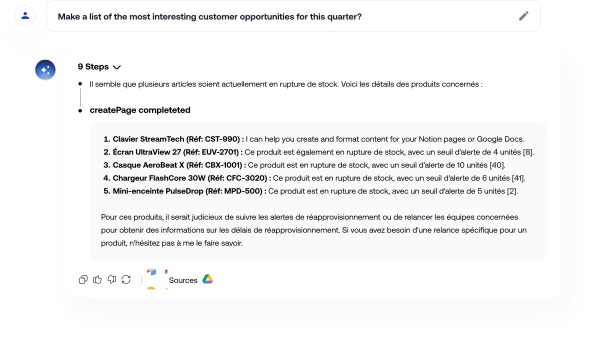
Governance best practices only create value when they are operationalized. Hymalaia’s enterprise AI agent platform is built to make that operationalization practical at scale. The platform provides automated discovery across your connected systems, surfacing AI activity across tools like Salesforce, SharePoint, Slack, and Google Workspace so your inventory stays current without manual effort.
Hymalaia’s role-based access controls (RBAC) and GDPR-compliant architecture align directly with IAM-integrated governance models. Audit logs, real-time data synchronization, and workflow automation give your compliance and operations teams the visibility they need without adding overhead. The platform supports cloud, on-premise, and hybrid deployment to match your organization’s security requirements.
If you are building toward NIST AI RMF alignment, ISO 42001 certification, or EU AI Act readiness, Hymalaia gives you the monitoring, analysis, and reporting infrastructure that transforms your governance framework from a document into a working program. Explore the full platform to see how enterprise AI governance can work for your organization, or review the platform features to understand the specific capabilities supporting your compliance roadmap.
The NIST AI Risk Management Framework organizes AI governance into four functions: GOVERN, MAP, MEASURE, and MANAGE, published in January 2023. It provides voluntary but widely adopted guidance for managing AI risk across the full system lifecycle.
ISO 42001 certification typically takes three to six months for organizations already holding ISO 27001, and involves a two-stage audit followed by annual surveillance audits on a three-year cycle.
The EU AI Act’s general provisions apply from August 2, 2026, requiring enterprises with high-risk AI systems to implement data governance controls, including automated data lineage tracking and audit trail documentation.
Real-time enforcement requires integrating your governance policies with identity and access management systems, allowing federated governance architectures to block or escalate unauthorized AI actions at the point of execution.
Treating governance as a documentation exercise rather than an operational program is the most common failure. The NIST AI RMF GOVERN function must be established first to create real organizational authority before measurement or management activities can succeed.
