TL;DR:
- AI-powered operational analytics embeds intelligence within workflows, enabling real-time decision-making and automation. It requires unified data standards, governance, cross-functional teams, and continuous monitoring for effective enterprise deployment. Moving from passive reporting to proactive action unlocks significant efficiency, accuracy, and competitive advantage.
Most enterprises treat analytics as a rearview mirror. They collect data, build dashboards, review reports in weekly meetings, and then decide what to do next. By the time a decision lands, the moment has passed. AI-powered operational analytics breaks this cycle entirely, embedding intelligence directly into the workflows where decisions happen, so your organization doesn’t just understand what occurred but acts on it in real time. This guide walks you through the definition, mechanics, governance requirements, implementation steps, and high-impact use cases you need to move from passive reporting to proactive, automated decision-making.
| Point | Details |
|---|---|
| Real-time decisioning | AI-powered operational analytics enables immediate, informed decisions inside enterprise workflows. |
| Governance is essential | Careful process design and oversight keep AI automation trustworthy. |
| Start small, scale smart | Pilot projects with iterative monitoring set the stage for enterprise-wide impact. |
| Integration unlocks value | Linking IoT, CRM, and ERP systems maximizes analytics and automation potential. |
| Vendor due diligence | Demand clarity on data freshness, model monitoring, and exception handling when evaluating solutions. |
Traditional business intelligence answers one question: what happened? It pulls historical data, aggregates it into reports, and surfaces trends after the fact. That approach works for quarterly reviews. It fails completely when a supply chain disruption is unfolding, a fraud pattern is emerging, or a customer is abandoning a high-value transaction.
AI-powered operational analytics is fundamentally different. It answers a different question: what should happen right now? As Gartner defines it, operational analytics is embedded into operational systems and supports transaction-like, in-the-moment decisioning, often described as operational intelligence or decision intelligence. The emphasis is on integration within active systems, not downstream reporting layers.
Here’s what distinguishes it from conventional BI:
“Operational intelligence is no longer optional for enterprises that want to compete on speed and data accuracy. The shift from retrospective to real-time is not incremental. It’s architectural.”
For enterprise leaders, this distinction is critical. Investing in AI capabilities layered on top of a reporting infrastructure won’t produce operational intelligence. You need AI governance frameworks and zero trust security for AI baked into the architecture from day one, not added as compliance afterthoughts.

Understanding what AI-powered operational analytics is, we next explore its underlying mechanisms and organizational prerequisites.
The data-to-action lifecycle has five stages, and each one must function reliably for the system to deliver real value:
This lifecycle requires cross-functional ownership. It’s not an IT project or a data science initiative in isolation. It spans multiple roles:
| Role | Responsibility |
|---|---|
| IT architects | Data pipeline infrastructure, API integrations, security controls |
| Data scientists | Model development, validation, and performance monitoring |
| Operations managers | Process design, exception handling, threshold definition |
| Business owners | Use case prioritization, outcome definition, ROI tracking |
| Compliance teams | Governance policies, audit trails, regulatory alignment |
Compare this to traditional BI at a structural level:
| Dimension | Traditional BI | AI-Powered Operational Analytics |
|---|---|---|
| Data freshness | Hours to days old | Real-time or near-real-time |
| Decision type | Human-interpreted reports | Automated, ML-driven actions |
| Integration depth | Parallel reporting layer | Embedded in operational systems |
| Speed of impact | Days to weeks post-analysis | Seconds to minutes |
| Primary output | Dashboard or report | Triggered workflow or action |

Pro Tip: When building your implementation team, assign a dedicated “analytics operations” role that sits between data science and business operations. This person translates model outputs into actionable process rules, preventing the common failure mode where models are built but never operationalized.
Following AI deployment best practices from the outset reduces the friction between model development and production integration significantly.
Having explained the operating model, it’s crucial to clarify which foundational requirements must be in place for safe and effective AI-powered analytics.
Skipping prerequisites is the fastest path to failed AI programs. Many organizations launch pilots on weak data foundations and wonder why models underperform or produce inconsistent outputs. The non-negotiable foundation includes:
“Automation must be governed, with careful decision and process design, to avoid unmonitored automation and trust issues.” Gartner on governance
This quote reflects a pattern we see repeatedly. Organizations eager to automate move too fast, skip process design, and create automation that operates outside human visibility. The result isn’t efficiency; it’s a liability.
Risk management for AI and robust AI system guardrails are not optional layers. They are structural requirements for any enterprise deploying AI in operational contexts.
Pro Tip: Design your exception handling before you design your automation. Every automated decision should have a defined escalation path: what triggers human review, who receives the escalation, and what the response time expectation is. This prevents automation from becoming a black box.
Trust is also a people problem, not just a technical one. Operations teams who see AI making decisions in their domain without visibility or override capability will resist adoption. Transparency in how models make decisions, and clear documentation of what they can and cannot do, is essential for organizational buy-in.
With the prerequisites and governance in place, here’s how successful enterprises should approach deploying AI-powered operational analytics.
Pilots that scale iteratively with ongoing monitoring are consistently more successful than big-bang deployments. Here is the step-by-step path we recommend:
Common pitfalls to avoid during this process:
Pro Tip: When evaluating vendors for iterative AI analytics scaling, ask specifically how they handle model monitoring in production. Vendors who can’t clearly explain their drift detection, retraining triggers, and audit trail capabilities are not ready for enterprise operational environments. Also, engage AI consulting for enterprise expertise early to avoid architectural decisions that create technical debt at scale.
To ground the framework, let’s see how AI-powered operational analytics is already transforming enterprise functions in practice.
AI and ML enhance analytics through anomaly detection, pattern recognition, and automation of repetitive decisions. These capabilities translate directly into business value across several high-impact domains:
| Use case | Before AI operational analytics | After AI operational analytics |
|---|---|---|
| Fraud detection | Manual review, 4 to 24 hour response | Automated scoring, sub-second response |
| Inventory management | Weekly reorder reports | Real-time triggered reorders |
| IT incident response | Alert fatigue, 30 to 60 minute MTTR | Automated triage, under 5 minute MTTR |
| Customer support routing | Manual ticket assignment | ML-based routing, priority scoring |
| Sales pipeline review | Weekly manual CRM review | Continuous automated risk scoring |
Explore the full range of platform features for operational AI to see which capabilities map to your highest-priority use cases.
Here is the uncomfortable truth most guides won’t state directly: the reason most analytics projects fail to produce operational impact has nothing to do with data quality or model performance. It’s a design problem. Organizations build analytics capabilities without designing the decision processes those capabilities are supposed to serve.
You can have perfect data, a well-trained model, and a beautiful dashboard. If no one has defined what action gets triggered by what output, the insight dies in a meeting room. The transition from analytics to action requires explicit process design, not just technical deployment.
The most overlooked questions leaders must ask before committing to an operational analytics initiative are exactly the ones Gartner surfaces in their decision intelligence guidance: how vendors handle operations, specifically data freshness, event triggering, metric definitions, model lifecycle management, and exception handling. If a vendor can’t answer those questions in operational terms rather than marketing terms, they are selling you a BI tool dressed in AI language.
We also believe the future of operational analytics isn’t about more automation. It’s about better-governed automation. The organizations that will lead over the next five years are those that invest in transparency mechanisms, real-time oversight, and building trust in AI systems alongside the models themselves. Speed without accountability creates more risk than value.
The enterprises that get this right will not just make faster decisions. They will make better ones, consistently, at scale, with the confidence that comes from knowing their automation is governed, monitored, and aligned with human intent.
You’ve seen the framework, the mechanics, and the real-world impact. Now the question is: where does your organization stand, and what’s the fastest path to operational AI that actually delivers?
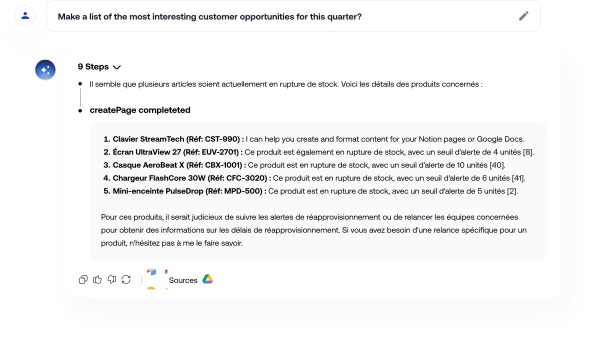
The Hymalaia enterprise AI platform 🏔️ is built specifically for organizations ready to move beyond dashboards and into real-time, automated decisioning. With native connectors to over 50 enterprise tools including Salesforce, Slack, SharePoint, and Google Workspace, Hymalaia embeds AI intelligence directly into the workflows your teams use every day. Explore the full AI platform features to match capabilities to your operational priorities, or work with our consulting services team to design a governed, scalable implementation roadmap. The next operational decision your team makes could already be automated. Book a demo and let’s make it happen.
It enables real-time, in-the-moment decisions by embedding intelligence directly into operational workflows. As Gartner notes, operational analytics is embedded into operational systems to support transaction-like decisioning, eliminating the delay between data availability and action.
Incomplete governance creates unmonitored automation and erodes trust across operational teams. Gartner’s guidance is explicit: automation must be governed with careful decision and process design, or it will operate outside human visibility and create significant liability.
The most common integrations include IoT platforms for sensor and telemetry data, CRM systems for customer behavioral data, and ERP systems for financial and supply chain data. Cross-system integration across these three categories enables end-to-end operational visibility and automated action.
Traditional BI reports on historical trends for human interpretation after the fact. Operational analytics, by contrast, enables analytical processing within transaction-like workloads, triggering automated actions in real time rather than generating retrospective reports.
