Deploying autonomous agent platforms at the enterprise level often results in integration headaches, security compromises, or workflows that leave out exception handling and governance. Many offerings lock you into single cloud hosting, restrict you to one AI model provider, or require heavy professional services before internal teams can actually operate the system. This comparison outlines pricing transparency, deployment flexibility, and governance features across six enterprise autonomous agent platforms so you can select a solution that actually fits your enterprise data, compliance, and scale requirements without vendor lock-in.

Hymalaia’s marketing materials state it connects with more than 50 enterprise tools, a claim that frames its integration-first approach. The platform pairs retrieval-augmented generation with multi-LLM deployment and supports cloud, on-premise, and hybrid hosting models.
Hymalaia’s marketing materials emphasize an advanced hybrid RAG approach that blends vector semantic search with keyword precision. That combination is designed to reduce hallucination and improve answer grounding when agents query CRM, ticketing, and document stores.
Integrations: the connector figure above lets you index CRM, support, and collaboration systems into a single retrieval layer for cross-source queries.
Grounded responses: the hybrid retrieval approach produces shorter, evidence-backed answers rather than long speculative text, which helps analysts cite sources during reviews.
Agent building without code: product and operations teams can assemble and tune agents from prebuilt blocks and deploy them against specific datasets without full engineering sprints.
Security and governance: vendor materials list role-based controls plus GDPR and AES-256 protections, which supports internal audit and compliance workflows.
Deployment flexibility: cloud, on-premise, or hybrid hosting options let security teams keep sensitive data behind the corporate perimeter while product teams iterate externally.
Large enterprises and enterprise teams that must run governed AI at scale and connect many internal systems. Security, compliance, and data residency requirements make Hymalaia a fit for regulated industries and distributed global organizations.
Multi-LLM deployment combined with on-premise hosting lets you keep sensitive models and data inside corporate boundaries while still iterating agents across business functions. That technical choice changes who owns model risk and where governance checkpoints live.
The vendor describes a multinational that linked CRM, support, and its data warehouse to run agents that handle customer follow-ups, surface sales signals, and answer internal knowledge questions. The case reduced repetitive work and sped decision cycles for field reps.
Starter pricing listed at €15 per month from ten users, with Business and Enterprise tiers and custom quotes for on-premise deployments or heavy API usage. Expect usage-based elements at higher volumes and for extensive agent deployment.
Website: https://hymalaia.com
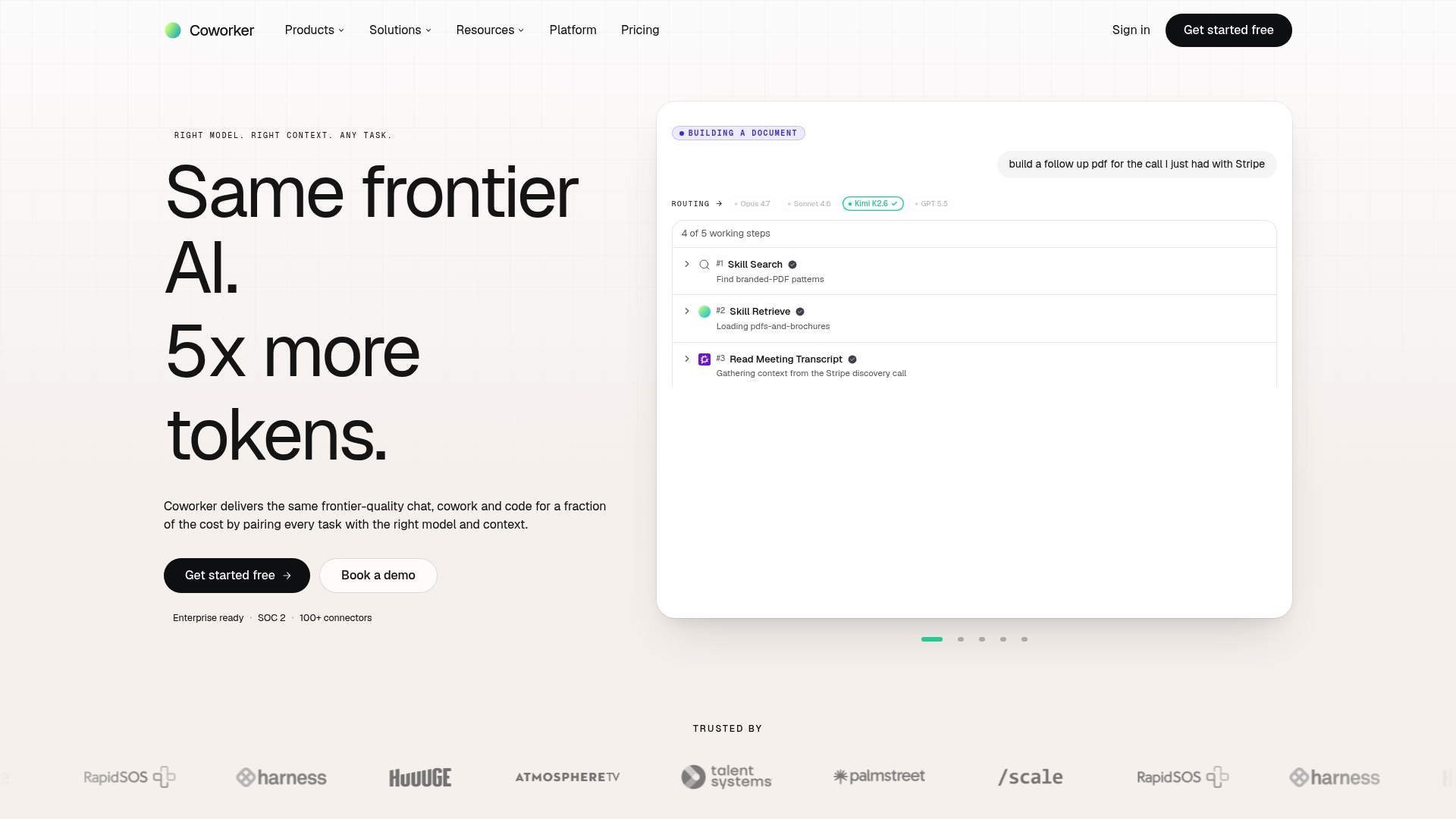
The vendor advertises integration with over 100 enterprise tools, a breadth that lets agents surface context from Salesforce, Jira, and Slack without manual data wrangling. Coworker centers its approach on a permissioned knowledge graph that links organizational memory to agents for ongoing learning.
Coworker’s central differentiator is the deep knowledge graph that makes agents entity-aware and permissioned across an organization. That architecture is designed to let agents learn continuously from updates to organizational memory while honoring access controls and audit trails.
The platform offers cross-team automation that reduces repetitive work in sales, support, and engineering; automations like pipeline hygiene and bug triage are ready-made flows.
The vendor states compliance posture including SOC 2, GDPR, and CASA Tier 2, which signals an enterprise focus on governance and data handling.
Dynamic model routing and ongoing learning aim to balance accuracy and cost by sending tasks to the most appropriate model rather than a single large model for every job.
Flexible deployment choices—cloud, private cloud, or air-gapped—help IT align the product with corporate infrastructure and regulatory constraints.
Third-party reviews report slow or inconsistent customer support responsiveness, which can slow onboarding and issue resolution for large deployments.
Some users describe frustration with billing and auto-renewal practices that required escalation to resolve.
The product name and some marketing refer to coworking listings; a number of reviews cite inaccurate availability for spaces, which has created trust issues for certain buyers.
If your procurement team demands white-glove vendor support during rollout, Coworker’s reported support gaps could be a friction point. Also avoid it if your use case depends on an immaculate public listing service; reported inaccuracies around space availability indicate that catalog reliability is not guaranteed.
Large enterprises that need AI-driven workflow automation and centralized knowledge management across multiple departments. Teams with strict compliance, hybrid infrastructure, and complex toolchains will find the deployment options useful.
A mid-market SaaS vendor used Coworker to automate customer health monitoring, draft support replies, and prepare pre-meeting research. According to the vendor, the integration lowered manual effort on those tasks and improved engagement cadence with customers.
Starts at $0 with a 7-day free trial. Paid plans begin at $29.99 per user per month for Standard tiers, with custom pricing for enterprise agreements and dedicated deployments.
Website: https://coworker.ai
A vendor case study reports a financial institution reduced SaaS spend by 25 to 35 percent after deploying Brucke.AI across core systems. That same case study also claims faster audit cycles and multimillion dollar annual savings, a claim I treat as vendor reported.
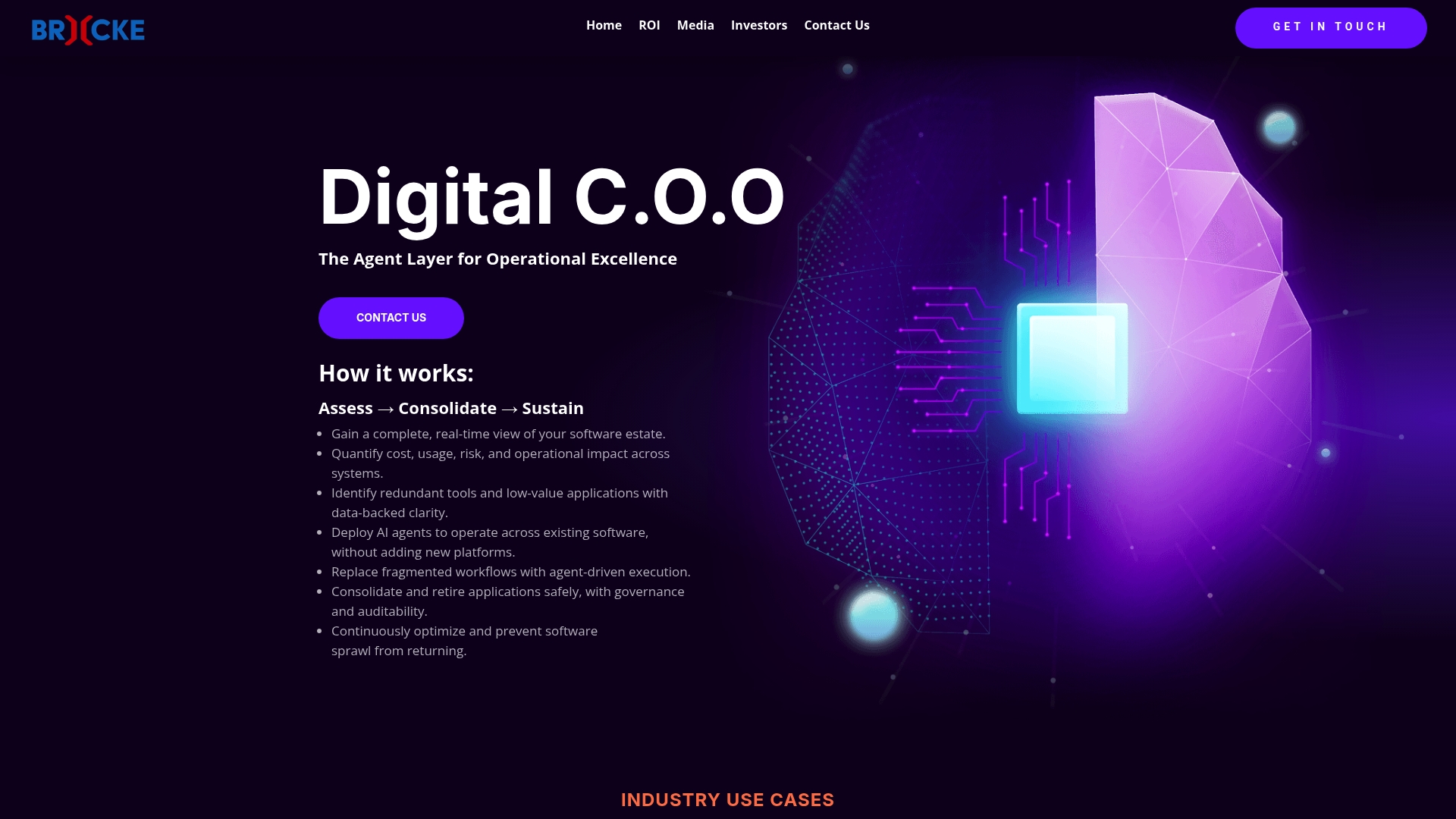
Brucke.AI positions itself as a browser based Digital COO that ties analytics, optimization, and automation into one operational layer for large enterprises.
What separates Brucke.AI is the ability to deploy AI agents and decision optimization directly across an enterprise estate without forcing a wholesale platform migration. That approach lets you keep legacy systems while injecting centralized decision logic and automation.
This matters when procurement or risk stops a rip and replace. You get optimization layers that operate on live systems rather than waiting for a full replatform.
If your team lacks in house analytics expertise or you need a turnkey point solution that installs in weeks, Brucke.AI may not be the right choice. The product suits projects where you can budget a multi month integration and a small center of excellence to customize models.
It is not ideal for small teams that expect predictable, per seat pricing and minimal configuration.
Operational managers, data driven decision makers, and business leaders in medium and large enterprises who need to reduce operational cost and unify automation across mixed systems. Good for groups that can invest in an integration phase and want to preserve existing tooling.
The vendor’s case study claims annual savings of $8 to 15 million by consolidating agents and orchestrating processes across core systems. Use cases include regulatory reporting automation, supply chain optimization, and centralizing administrative workflows in healthcare.
That savings claim above is vendor reported and should be validated in a pilot before scaling.
Pricing is not published. The vendor appears to offer enterprise engagements and custom proposals rather than standard self serve tiers, so expect procurement level discussions and a statement of work for larger deployments.
Website: https://brucke.ai
Decidr installs an operating system that links organizational data, workflows, and AI into a single governed decision layer. The vendor positions DecidrOS to capture tacit judgment and exception handling that traditional automation often misses.
Decidr sells a structured operating system for decision making rather than a set of point automations. That focus concentrates value on capturing expert judgment and embedding governance directly into workflows. Compared with Hymalaia, which emphasizes autonomous agents across many tools, Decidr narrows the bet to an integrated decision fabric.
If you lack documented decision rules or canonical data models, Decidr will force a heavy upfront investment in modeling and governance. Teams looking for a light add on to orchestrate a few workflows will find the installation overhead disproportionate to the benefit.
Mid to large enterprises that want to operationalize decisions with governance, scale AI capabilities, and reduce risky manual exceptions. Best for organizations that can commit product, data, and governance resources to redesign how decisions are executed.
A global company installs DecidrOS to unify sales, operations, and finance decision logic. The deployment captures approval rules, routes exceptions to local managers, and surfaces compliance metadata to auditors in a single dashboard.
The vendor lists pricing as informational only. Prospects should expect a consultative sales process and custom pricing that reflects implementation scope, module selection, and governance requirements.
Website: https://decidr.ai
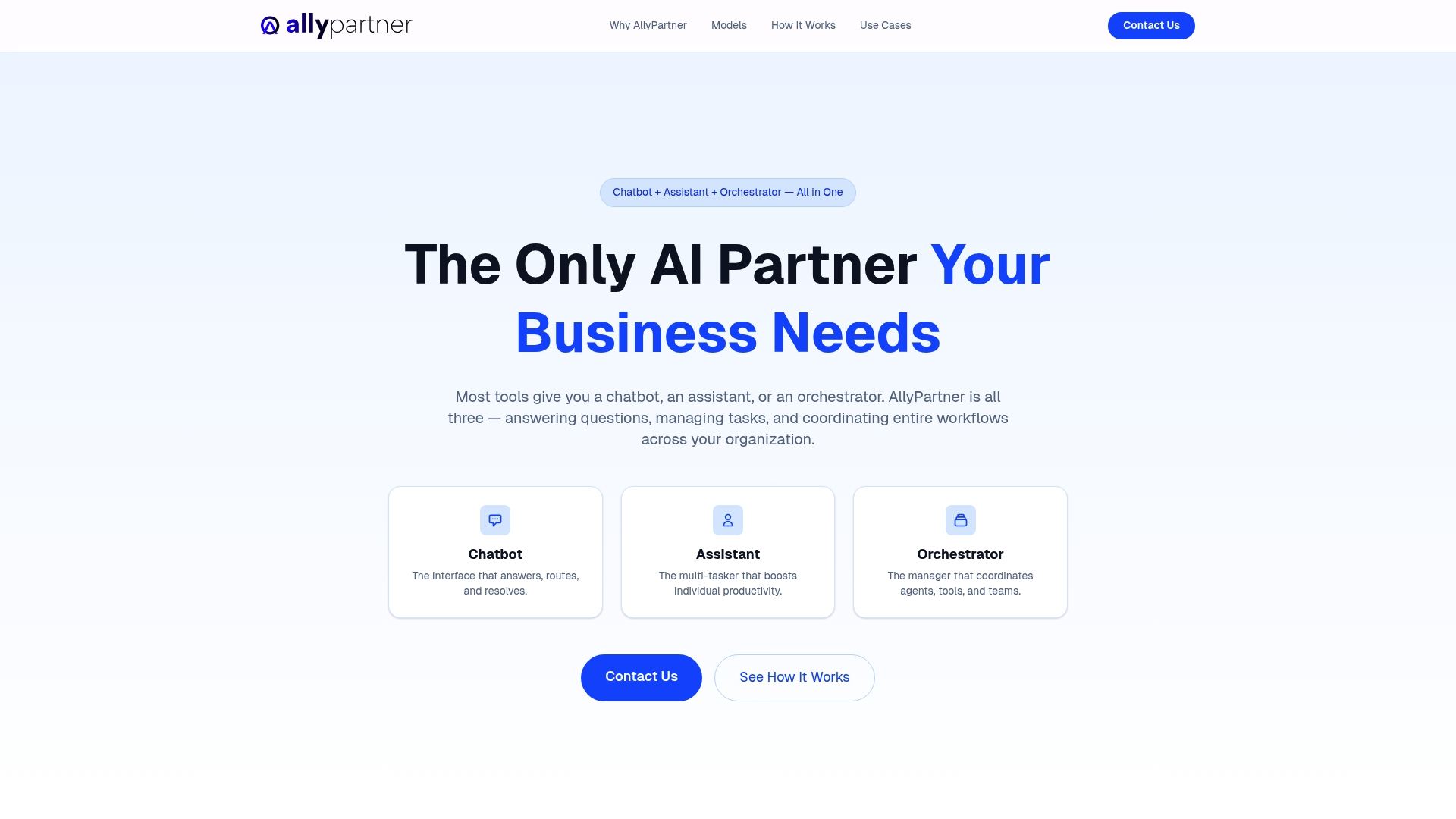
All three AI roles — chatbot, assistant, and orchestrator — are combined inside a single product, which is an uncommon packaging choice for enterprise workflow tools. According to the vendor, teams can be operational in minutes without complex setup or vendor lock-in.
The vendor positions the product around a single control plane that runs conversational agents, background assistants, and multi-agent orchestration together. That focus on unified operations and model agnostic flexibility targets teams that want to swap providers or run private models without ripping apart workflows.
Unified approach reduces context switching between conversational bots and automation. Operators manage one configuration instead of three separate tools.
Supports any AI model, including local and custom models, which helps legal and security teams keep sensitive data inside private infrastructure.
Easy, quick setup with connectors for Slack, Gmail, and common enterprise systems, making pilot projects faster to stand up than heavy integration projects.
Professional-grade multi-agent coordination allows breaking a cross-team task into parallel activities and tracking handoffs without scripting each step.
Broad departmental use cases from sales cadence automation to HR onboarding, so the same deployment can serve multiple lines of business.
Publicly available third-party reviews are limited, so most productivity claims come from vendor materials rather than independent benchmarks.
The vendor does not publish pricing tiers, which makes procurement planning harder and may slow vendor comparison in RFPs.
The product brief leaves unclear how it handles extremely niche domain tasks that require heavy fine-tuning or specialist models.
If your procurement process needs transparent list pricing for quick budget approvals, this product may force a sales engagement before you can estimate cost. If independent customer references are a gating requirement, the limited public review footprint increases validation work. If your use case requires deep prebuilt domain models only, expect some custom work.
You and your IT or product team if you need an integrated AI control plane that reduces tool sprawl and supports private models. Large departmental pilots that must show ROI fast will benefit from the rapid setup pitch and multi-role consolidation.
A midmarket company deployed AllyPartner to automate weekly status reports, push CRM updates from sales calls, and coordinate cross-functional follow ups. The deployment reduced manual reporting steps and shortened internal handoffs between Sales and Ops.
The vendor does not disclose list pricing in public materials. Expect a custom enterprise pricing model and per-deployment quotes rather than a public per-seat tier. Plan to engage sales for an estimate and a scoped statement of work.
Website: https://allypartner.com
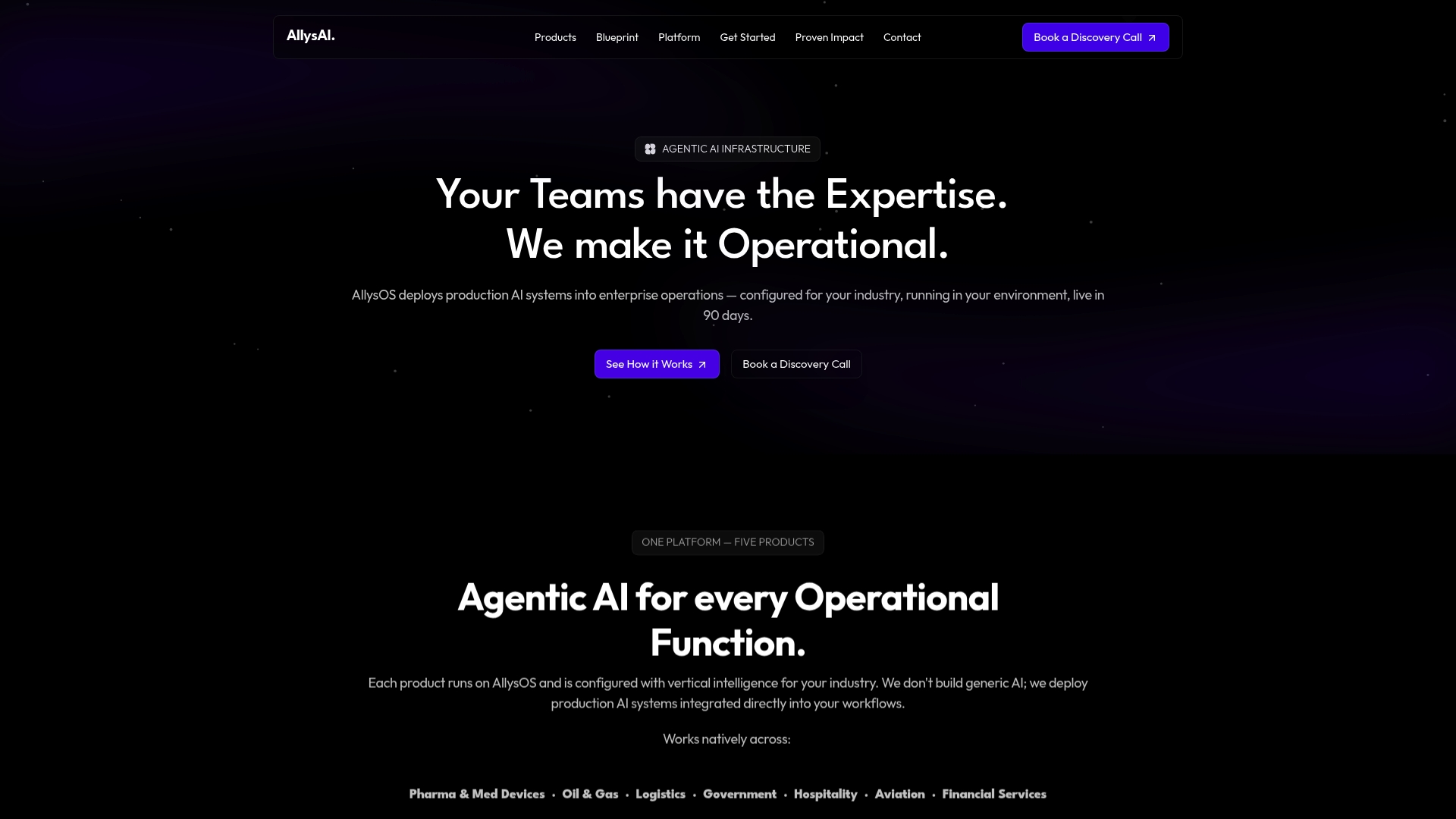
The vendor advertises production AI deployments into core industry operations with full capability transfer to client teams in 90 days or less. That 90-day deployment claim targets regulated environments where speed of handoff and compliance posture matter.
AllysAI emphasizes a short, protocol-driven rollout that hands operation to internal teams rather than retaining provider control. That combination of fast deployment and capability transfer sets it apart from vendors that keep operations managed or only provide advisory engagements.
Operational velocity: the 90-day deployment claim implies faster time to use for field and support teams compared with longer professional services projects.
Industry fit: preconfigured vertical intelligence reduces customization cycles for regulated workflows and compliance checks.
Security and compliance focus: the product data stresses data sovereignty and enterprise grade infrastructure, which matters for regulated programs.
Internal independence: documented transfer of operations helps build internal skills and reduces long term vendor lock in.
Scalable architecture: built for enterprise scale and regulated environments rather than ad hoc pilot projects.
Public technical detail is thin. The vendor provides limited specifics about underlying models or architecture, which makes technical procurement reviews harder.
Integration complexity. Very bespoke legacy stacks may require heavy engineering and change management to integrate smoothly.
Pricing and trial clarity are not public. Procurement teams will need an RFP or discovery engagement to see cost and scope.
If your organization lacks mature digital infrastructure or centralized identity and data controls, integration will probably demand more effort than expected. Smaller teams or nonregulated businesses will likely find the engagement model and governance overhead excessive.
Large enterprises in regulated sectors such as Healthcare, Government, Oil and Gas, and Logistics that need production grade AI embedded in operations and have the internal teams to adopt and run solutions after handoff.
According to the vendor, a healthcare deployment that automated medical reps’ sales processes produced a 45% increase in meetings per week within 12 weeks. That 45% figure illustrates the kind of operational uplift AllysAI positions itself to deliver when deployed with executive sponsorship.
No public price list is provided. AllysAI appears to work through scoped enterprise engagements and discovery workshops, so budget estimates require a conversation with sales and a statement of work that matches regulatory and integration scope.
Website: https://allysai.com
Selecting the right platform for integrating autonomous agents into enterprise workflows depends on various factors, including deployment capabilities, flexibility of integration, and support structures. Here’s how six competitors stack up, highlighting where they excel and where some may fall short.
Hymalaia emphasizes a hybrid retrieval approach that integrates both semantic and keyword search methods, providing precise, contextually grounded answers. This capability reduces issues like inapplicable results during live queries. In contrast, Coworker focuses on utilizing a deep knowledge graph to ensure that agents remain entity-aware and updated while retaining data permissions. While both platforms provide functional integrations with primary enterprise tools, Coworker’s implementation model focuses on continuous training, enhancing long-term scalability in environments that adopt evolving data structures.
When it comes to deployment versatility, Hymalaia offers hosting options across cloud, on-premise, and hybrid configurations, catering to organizations with specific data residency restrictions like those in highly regulated industries. Similarly, AllysAI presents scalable architecture with the promise of rapid deployments within 90 days or fewer, targeting industries needing speed coupled with operational independence. However, organizations hesitant to adopt highly pre-configured implementations might find Hymalaia’s balance of control and flexibility more suitable.
For most enterprises requiring advanced autonomous agent capabilities while managing diverse data sources securely, Hymalaia offers a balanced solution that combines hybrid retrieval systems and scalable deployment models. However, industries heavily reliant on pre-built domain adaptations may find Coworker better suited for their needs. Testing within organizational use cases remains crucial to ensure alignment with long-term goals.
For organizations seeking integrated AI solutions to streamline workflows, connect systems, and enhance decision-making, the following platforms offer a variety of features and capabilities tailored to enterprise needs.
| Product | Key Differentiator | Best For | Pricing | Notable Limitation |
|---|---|---|---|---|
| Hymalaia | Advanced hybrid RAG combining vector search and precision | Enterprises needing security and system linking | Starting at €15/month from 10 users | Complex custom integrations require vendor support |
| Coworker | Deep knowledge graph enabling ongoing learning | Compliance-focused, multi-department enterprises | From $0; paid plans $29.99/user/month | Reviews mention inconsistent customer support |
| Brucke.AI | Decision optimization without replacing systems | Operational leaders optimizing processes | Not disclosed | Initial setup complexity slows implementation |
| Decidr | Structured decision OS embedding governance | Teams formalizing operational decision policies | Not disclosed | Heavy upfront modeling investment required |
| AllyPartner | Combined chatbot, assistant, and orchestrator modules | Multi-role departmental workflows | Not disclosed | Limited third-party reviews make validation harder |
Choosing the right AI platform to unify enterprise search and automate complex workflows can feel overwhelming when exploring allyra.ai alternatives. Hymalaia addresses key user concerns by offering a secure, scalable environment that connects over 50 enterprise tools like Salesforce, Slack, and Google Workspace for real-time data analysis and AI-driven automation.
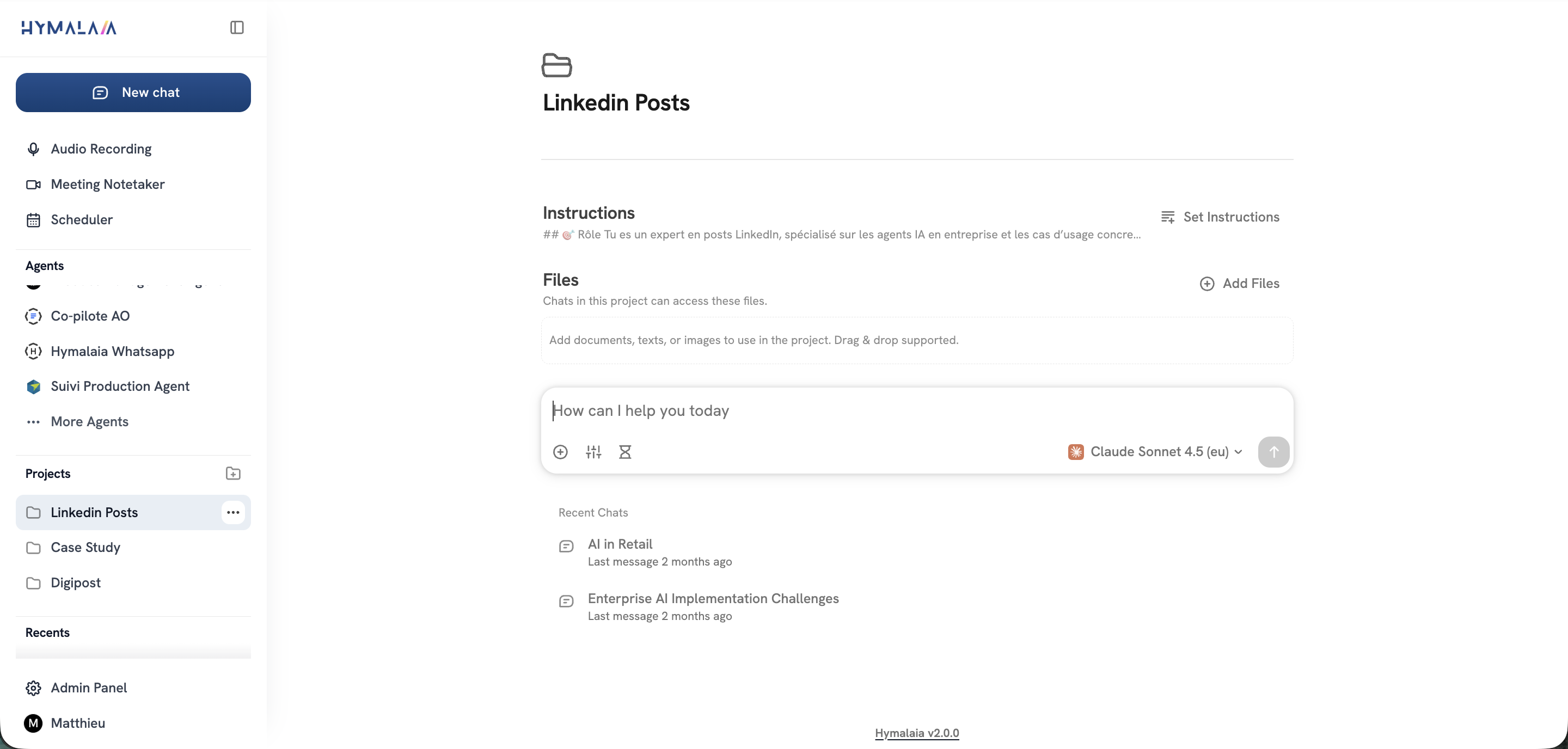
Experience how Hymalaia’s hybrid deployment and governance features reduce guesswork and empower enterprise teams to accelerate decision-making and automate routine tasks effortlessly. Visit Hymalaia’s homepage to see how you can connect your CRM, support, and collaboration platforms in minutes and unlock AI-powered insights that grow productivity across departments.
Hymalaia’s hybrid retrieval approach produces shorter, evidence-backed answers, enhancing the accuracy of responses by minimizing speculative text. This feature helps analysts cite sources effectively during reviews, which is crucial for data integrity in enterprise settings. Organizations looking for reliable information will benefit from this grounded response mechanism.
Coworker offers multi-cloud and air-gapped deployment options, which cater to environments that require stringent data controls. In contrast, Hymalaia provides flexibility with cloud, on-premise, or hybrid hosting, making it suitable for organizations that want to keep sensitive data within corporate boundaries. Consider your regulatory requirements to choose accordingly.
Brucke.AI excels in enabling AI-driven automation for operational tasks across existing systems, streamlining workflows without requiring a full platform migration. Hymalaia, while powerful, focuses more on integrating multiple data sources for cross-source queries, making it less specialized for immediate task automation. Businesses that need quick automation might favor Brucke.AI.
Yes, Hymalaia incorporates security and governance controls, including role-based access and GDPR compliance, supporting internal audit and compliance workflows. This ensures that organizations in regulated industries can operate within necessary legal frameworks while using AI solutions. Companies in these sectors should consider this aspect when evaluating their options.
Hymalaia’s starter pricing starts at €15 per month for ten users, while other platforms, like Coworker, begin at $0 with a free trial, escalating to $29.99 per user for paid plans. This tiered structure allows businesses to choose a pricing model that best fits their budget and needs while assessing the platform’s value during the trial phase.
